What Twelve Years as CEO Taught Me About Arriving Well in Portugal
Thought Leadership | July, 2026
Relocating to Portugal looks simple and is not: an international family arriving in the Algarve will typically deal with nine different professionals who never speak to each other. After thirty years as a lawyer and twelve as CEO of the Awilhelmsen Group's Portuguese operations, running a five-star resort in the Golden Triangle, Sílvia Biscaia founded Biscaia & Co, a Private Office in Almancil, to be the single point of contact she spent a career becoming for one shareholder. These are the lessons behind it.
From lawyer to CEO in the Algarve
In 1995, I joined one of the Algarve's established law firms, João Nabais e Associados, where I would spend nineteen years, rising from associate to partner. My practice was real estate, corporate and commercial work, the legal machinery of a region that international families were quietly making their own. It was through that firm that I began advising a Norwegian group, part of Awilhelmsen, which had been developing the coastline between Vale do Lobo and Quinta do Lago since the 1990s.
What began as external legal counsel became something rarer. In 2008 I worked on the licensing of the group's five-star resort, Dunas Douradas Beach Club. I was later brought inside, corporate secretary, then board member, and in 2014 I was asked to lead all of the group's Portuguese operations as CEO. For the next decade I ran four companies at once: the resort, the development company, the property agency, and the group holding. I thought, as a lawyer of nearly twenty years, that I knew what international investors needed from Portugal. I was partly right.
What I knew was the legal side of arriving: the purchase structures, the tax registrations, the licences, the contracts. What I learned, as a CEO, was everything else and everything else turned out to be most of it.
The machinery of moving to Portugal
Running a five-star resort teaches you a particular discipline. A guest does not care that the laundry supplier changed or that a permit took three months. A guest cares that the towels are there and the pool is warm. Over those years, leading a team of more than a hundred people, delivering multi-million-euro renovations, taking two residential projects from license to handover, managing properties for owners from a dozen countries, and earning the resort international recognition, including at the World Travel Awards, I came to see that international families arriving in Portugal are, in one respect, exactly like hotel guests. They do not want to manage the machinery. They want the result.
And yet the machinery is what Portugal hands them. A family relocating to Portugal will typically deal with a lawyer, a tax advisor, an estate agent, a bank, an architect, a builder, an interior designer, a property manager and several public departments. Each is often excellent. Together, they are a web of conversations that the client is left to coordinate, in a language they may not speak, under rules they cannot be expected to know.
For twelve years, my job was to be the point where all of those threads met for one shareholder. The group made a decision in Oslo; my team in Almancil turned it into a licensed, built, furnished, managed reality. The shareholder never chased a permit. That was the job.
Three lessons. And a fourth I did not expect
The first is that trust is operational before it is emotional. Clients do not trust you because you say the right things at dinner. They trust you because the thing you said would happen on Tuesday happened on Tuesday. Scandinavian shareholders are demanding in precisely this way, and it is a good school.
The second is that legal thinking belongs at the beginning. Most expensive problems I have seen in thirty years of practice were not caused by bad intentions but by decisions taken before anyone asked a lawyer the right question. When the legal analysis comes first, before the offer, before the design, before the move it stops being a cost and becomes the foundation. It is why, after three decades in practice, I founded my own firm, BVA - Biscaia, Viegas e Associados, which today anchors the legal dimension of everything we do.
The third is that this region rewards patience. The Algarve looks informal; it is not. It runs on relationships built over years, with municipalities, builders, neighbours, suppliers. There is no shortcut to thirty years of knowing who to call. There is only having spent the thirty years.
The fourth lesson arrived through the walls. Part of my work at the resort was curating art for dozens of premium apartments, choosing, for each space, the pieces that would define its identity. I expected this to be the pleasant margin of the job; painting is my own private passion, and I assumed it would stay private. Instead, I watched art do commercial work. Spaces with a considered identity were requested by name, photographed, remembered, returned to. Owners asked who had chosen the pieces, and then asked us to choose theirs. Beauty, I learned, is not the opposite of operations. Done seriously, it is operations.
Art as an asset in Portugal
There is a further dimension to art in Portugal that deserves to be said calmly, because it is usually either ignored or oversold. For private collectors, art is one of the more quietly intelligent assets a family can hold here. Portugal levies no wealth tax that touches a collection. Works passing to a spouse or children are exempt from the stamp duty that stands in for inheritance tax. Gains realized by a private individual on the sale of a work of art fall, as the law currently stands, outside the categories of taxable capital gains, a treatment few other assets enjoy. And the framework has continued to move in collectors' favour, with the recent State Budget approving a reduction of VAT on art sales. None of this should ever drive a purchase, one buys a painting to live with it, but for families structuring a life in Portugal, it means the walls can be part of the asset strategy, not merely its decoration. As with everything fiscal, the detail decides the outcome, and each situation deserves proper analysis before it shapes a decision.
From one group to many families: Biscaia & Co
When the group concluded its cycle in Portugal, in 2023 and 2024, a transition through which we kept the resort's operations and standards running to the last day, the natural question was what to do with all of this: the method, the network, the standard, and yes, the eye. The answer became Biscaia & Co: a Private Office in Almancil, in the Algarve's Golden Triangle, that does for many families what I spent twelve years doing for one group. A single point of contact for the whole of life in Portugal: legal, fiscal, property, projects, design, art, management, relocation, with the client relationship held in one pair of hands. It is why our office has a gallery where most offices have a lobby.
Portugal is simple to love. It is complex to navigate. After thirty years in the law and twelve running an international group's operations here, I believe the navigation is a craft in its own right, and that families deserve to arrive the way our shareholder's projects were delivered: calmly, completely, and on Tuesday.
Author: Sílvia Biscaia.
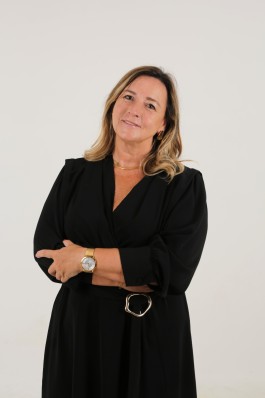
Sílvia Biscaia is the founder of Biscaia & Co, a Private Office in Almancil, in the Algarve's Golden Triangle, providing legal, fiscal, property, development, design, management and relocation services to international families through a single point of contact. A lawyer for over thirty years and former CEO of the Awilhelmsen Group's Portuguese operations, she is also founding partner of BVA — Biscaia, Viegas e Associados. As an artist, she shows her work at the office.
FAQs
What is Biscaia & Co?
Biscaia & Co is a Private Office in Almancil, in the Algarve's Golden Triangle, serving international families and investors with interests in Portugal. Through its own expertise and a trusted network of partners, it coordinates everything a family needs here, legal, fiscal, property, development, design, management and relocation, through a single point of contact.
Who is Sílvia Biscaia?
Sílvia Biscaia is a Portuguese lawyer with over thirty years of practice and the founder of Biscaia & Co. From 2014 to 2026 she was CEO of the Awilhelmsen Group's Portuguese operations, leading the five-star Dunas Douradas Beach Club resort and delivering two luxury residential developments in the Golden Triangle. She is also founding partner of the law firm BVA — Biscaia, Viegas e Associados.
Is art a tax-efficient asset in Portugal?
For private collectors, art enjoys favourable treatment in Portugal: there is no wealth tax, transfers to a spouse or children are exempt from stamp duty, and gains on sales by private individuals currently fall outside taxable capital gains categories. Tax law changes and every situation is different, so specific decisions should always be preceded by qualified advice.
What does a Private Office do?
A Private Office acts as a family's single point of contact for an entire area of life — in Biscaia & Co's case, life in Portugal. Rather than the family coordinating a lawyer, agent, architect, builder and property manager separately, the Private Office selects, briefs and supervises them all, and holds one relationship with the client.
What Twelve Years as CEO Taught Me About Arriving Well in Portugal
Thought Leadership | July, 2026
Relocating to Portugal looks simple and is not: an international family arriving in the Algarve will typically deal with nine different professionals who never speak to each other. After thirty years as a lawyer and twelve as CEO of the Awilhelmsen Group's Portuguese operations, running a five-star resort in the Golden Triangle, Sílvia Biscaia founded Biscaia & Co, a Private Office in Almancil, to be the single point of contact she spent a career becoming for one shareholder. These are the lessons behind it.
From lawyer to CEO in the Algarve
In 1995, I joined one of the Algarve's established law firms, João Nabais e Associados, where I would spend nineteen years, rising from associate to partner. My practice was real estate, corporate and commercial work, the legal machinery of a region that international families were quietly making their own. It was through that firm that I began advising a Norwegian group, part of Awilhelmsen, which had been developing the coastline between Vale do Lobo and Quinta do Lago since the 1990s.
What began as external legal counsel became something rarer. In 2008 I worked on the licensing of the group's five-star resort, Dunas Douradas Beach Club. I was later brought inside, corporate secretary, then board member, and in 2014 I was asked to lead all of the group's Portuguese operations as CEO. For the next decade I ran four companies at once: the resort, the development company, the property agency, and the group holding. I thought, as a lawyer of nearly twenty years, that I knew what international investors needed from Portugal. I was partly right.
What I knew was the legal side of arriving: the purchase structures, the tax registrations, the licences, the contracts. What I learned, as a CEO, was everything else and everything else turned out to be most of it.
The machinery of moving to Portugal
Running a five-star resort teaches you a particular discipline. A guest does not care that the laundry supplier changed or that a permit took three months. A guest cares that the towels are there and the pool is warm. Over those years, leading a team of more than a hundred people, delivering multi-million-euro renovations, taking two residential projects from license to handover, managing properties for owners from a dozen countries, and earning the resort international recognition, including at the World Travel Awards, I came to see that international families arriving in Portugal are, in one respect, exactly like hotel guests. They do not want to manage the machinery. They want the result.
And yet the machinery is what Portugal hands them. A family relocating to Portugal will typically deal with a lawyer, a tax advisor, an estate agent, a bank, an architect, a builder, an interior designer, a property manager and several public departments. Each is often excellent. Together, they are a web of conversations that the client is left to coordinate, in a language they may not speak, under rules they cannot be expected to know.
For twelve years, my job was to be the point where all of those threads met for one shareholder. The group made a decision in Oslo; my team in Almancil turned it into a licensed, built, furnished, managed reality. The shareholder never chased a permit. That was the job.
Three lessons. And a fourth I did not expect
The first is that trust is operational before it is emotional. Clients do not trust you because you say the right things at dinner. They trust you because the thing you said would happen on Tuesday happened on Tuesday. Scandinavian shareholders are demanding in precisely this way, and it is a good school.
The second is that legal thinking belongs at the beginning. Most expensive problems I have seen in thirty years of practice were not caused by bad intentions but by decisions taken before anyone asked a lawyer the right question. When the legal analysis comes first, before the offer, before the design, before the move it stops being a cost and becomes the foundation. It is why, after three decades in practice, I founded my own firm, BVA - Biscaia, Viegas e Associados, which today anchors the legal dimension of everything we do.
The third is that this region rewards patience. The Algarve looks informal; it is not. It runs on relationships built over years, with municipalities, builders, neighbours, suppliers. There is no shortcut to thirty years of knowing who to call. There is only having spent the thirty years.
The fourth lesson arrived through the walls. Part of my work at the resort was curating art for dozens of premium apartments, choosing, for each space, the pieces that would define its identity. I expected this to be the pleasant margin of the job; painting is my own private passion, and I assumed it would stay private. Instead, I watched art do commercial work. Spaces with a considered identity were requested by name, photographed, remembered, returned to. Owners asked who had chosen the pieces, and then asked us to choose theirs. Beauty, I learned, is not the opposite of operations. Done seriously, it is operations.
Art as an asset in Portugal
There is a further dimension to art in Portugal that deserves to be said calmly, because it is usually either ignored or oversold. For private collectors, art is one of the more quietly intelligent assets a family can hold here. Portugal levies no wealth tax that touches a collection. Works passing to a spouse or children are exempt from the stamp duty that stands in for inheritance tax. Gains realized by a private individual on the sale of a work of art fall, as the law currently stands, outside the categories of taxable capital gains, a treatment few other assets enjoy. And the framework has continued to move in collectors' favour, with the recent State Budget approving a reduction of VAT on art sales. None of this should ever drive a purchase, one buys a painting to live with it, but for families structuring a life in Portugal, it means the walls can be part of the asset strategy, not merely its decoration. As with everything fiscal, the detail decides the outcome, and each situation deserves proper analysis before it shapes a decision.
From one group to many families: Biscaia & Co
When the group concluded its cycle in Portugal, in 2023 and 2024, a transition through which we kept the resort's operations and standards running to the last day, the natural question was what to do with all of this: the method, the network, the standard, and yes, the eye. The answer became Biscaia & Co: a Private Office in Almancil, in the Algarve's Golden Triangle, that does for many families what I spent twelve years doing for one group. A single point of contact for the whole of life in Portugal: legal, fiscal, property, projects, design, art, management, relocation, with the client relationship held in one pair of hands. It is why our office has a gallery where most offices have a lobby.
Portugal is simple to love. It is complex to navigate. After thirty years in the law and twelve running an international group's operations here, I believe the navigation is a craft in its own right, and that families deserve to arrive the way our shareholder's projects were delivered: calmly, completely, and on Tuesday.
Author: Sílvia Biscaia.
Sílvia Biscaia is the founder of Biscaia & Co, a Private Office in Almancil, in the Algarve's Golden Triangle, providing legal, fiscal, property, development, design, management and relocation services to international families through a single point of contact. A lawyer for over thirty years and former CEO of the Awilhelmsen Group's Portuguese operations, she is also founding partner of BVA — Biscaia, Viegas e Associados. As an artist, she shows her work at the office.
FAQs
What is Biscaia & Co?
Biscaia & Co is a Private Office in Almancil, in the Algarve's Golden Triangle, serving international families and investors with interests in Portugal. Through its own expertise and a trusted network of partners, it coordinates everything a family needs here, legal, fiscal, property, development, design, management and relocation, through a single point of contact.
Who is Sílvia Biscaia?
Sílvia Biscaia is a Portuguese lawyer with over thirty years of practice and the founder of Biscaia & Co. From 2014 to 2026 she was CEO of the Awilhelmsen Group's Portuguese operations, leading the five-star Dunas Douradas Beach Club resort and delivering two luxury residential developments in the Golden Triangle. She is also founding partner of the law firm BVA — Biscaia, Viegas e Associados.
Is art a tax-efficient asset in Portugal?
For private collectors, art enjoys favourable treatment in Portugal: there is no wealth tax, transfers to a spouse or children are exempt from stamp duty, and gains on sales by private individuals currently fall outside taxable capital gains categories. Tax law changes and every situation is different, so specific decisions should always be preceded by qualified advice.
What does a Private Office do?
A Private Office acts as a family's single point of contact for an entire area of life — in Biscaia & Co's case, life in Portugal. Rather than the family coordinating a lawyer, agent, architect, builder and property manager separately, the Private Office selects, briefs and supervises them all, and holds one relationship with the client.
