The Quiet Season
Portugal Lifestyle | August, 2026
Ask anyone in northern Europe about the Algarve and they will describe August: the full beaches, the long lunches, the light that seems to have been ordered in advance. They are not wrong. But August is the Algarve on stage. The people who live here, and the people who are thinking about living here, should be more interested in the rest of the year.
The quiet season begins sometime in late October, when the last charter flights thin out and the sea, still warm from summer, turns over to the residents. It is the season of golf at nine in the morning with no one pressing behind you, of restaurants where the owner has time to sit down at your table, of Praia do Garrão on a Tuesday with more herons than people.
It used to be said that the region closed in winter. That has quietly stopped being true. Faro airport now runs through the winter at volumes that would have counted as high season a decade ago, and the calendar of the Golden Triangle - Quinta do Lago, Vale do Lobo and Almancil - no longer has an off switch. The international schools run all year. The clinics run all year. The golf, famously, runs all year: this is the reason the Triangle exists at all.
What changes is the register. Summer here is social but winter is personal. The markets in Loulé and Almancil belong again to the people who cook. The coastal path between Garrão and Ancão empties into something close to privacy. Lunch moves indoors around a fireplace roughly four weeks a year, the Algarve winter is a rumour by northern standards, with most days ending in double digits and many in sunshine that permits lunch outside in January, lightly defended by a jumper.
There is a practical point beneath the romance. A house reveals itself in the quiet season. In August, every villa performs; in January you learn how it actually lives, where the sun reaches at ten in the morning, how the rooms hold warmth, whether the orientation was designed or accidental. It is why we always suggest that families considering a move spend time here between November and March. Not to be sold anything but to see the place with the stage lights off.
Those who do tend to notice the same things. That the light, lower and softer, is arguably better than in summer. That the region's rhythm, market, walk, lunch, work, sunset, survives perfectly well without the crowds it entertains in August. And that the distance from a grey morning in London or Oslo to a bright one in Almancil is two hours and forty minutes, gate to gate.
The Algarve in high summer is a place people visit. In the quiet season, it is a place people live. The difference between the two is, in the end, the difference between a holiday and a decision.
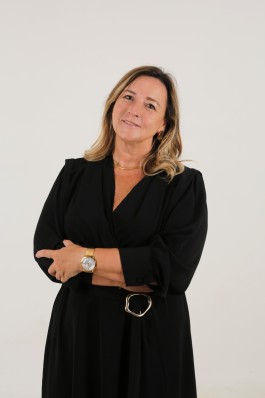
Author: Sílvia Biscaia.
Sílvia Biscaia is the founder of Biscaia & Co, a Private Office in Almancil, in the Algarve's Golden Triangle, providing legal, fiscal, property, development, design, management and relocation services to international families through a single point of contact. A lawyer for over thirty years and former CEO of the Awilhelmsen Group's Portuguese operations, she is also founding partner of BVA — Biscaia, Viegas e Associados. As an artist, she shows her work at the office.
FAQs
What is the weather like in the Algarve in winter?
Mild by northern European standards. Most winter days in the Algarve reach double-digit temperatures, and many are sunny enough for lunch outdoors in January with a light jumper. Days cold enough to call for a fireplace add up to roughly four weeks a year.
When is the quiet season in the Algarve?
The Algarve's quiet season begins in late October, when summer charter flights thin out and the sea is still warm, and runs through the winter until spring. It is the period when the region belongs mainly to its residents: uncrowded golf courses, quiet beaches and restaurants with time for their guests.
Is the Algarve closed in winter?
No. Faro Airport now operates through the winter at volumes that would once have counted as high season, and the Golden Triangle (Quinta do Lago, Vale do Lobo and Almancil) runs year-round. International schools, clinics, restaurants and golf courses all stay open throughout the year.
Can you play golf in the Algarve in winter?
Yes. Golf in the Algarve is played all year round, and the mild winter climate is the reason the Golden Triangle developed as a golf destination in the first place. In the quiet season, morning tee times are far less crowded than in summer.
What is the best time to visit the Algarve if I am thinking of moving there?
Between November and March. Biscaia & Co recommends that families considering a move spend time in the Algarve during the quiet season, to see how daily life, the region's rhythm and the properties themselves work outside the summer high season.
Why should I view a property in the Algarve in winter?
Because a house reveals itself in the quiet season. In August every villa looks its best; in January you can see where the sun reaches in the morning, how well the rooms hold warmth, and whether the orientation was properly designed. These are the details that matter for living in a home year-round.
What is there to do in the Golden Triangle in winter?
The quiet season is the time for morning golf, local markets in Loulé and Almancil, walks along the coastal path between Garrão and Ancão, and beaches such as Praia do Garrão almost to yourself. Restaurants stay open, and lunch outdoors in the winter sun is common.
How far is the Algarve from London?
Around two hours and forty minutes by air, gate to gate, from London to Faro, which serves the Golden Triangle. The short flight makes the Algarve easy to reach for winter stays and property viewings.
What is Biscaia & Co?
Biscaia & Co is a Private Office in Almancil, in the Algarve's Golden Triangle, serving international families and investors with interests in Portugal. Through its own expertise and a trusted network of partners, it coordinates everything a family needs here, legal, fiscal, property, development, design, management and relocation, through a single point of contact.
Who is Sílvia Biscaia?
Sílvia Biscaia is a Portuguese lawyer with over thirty years of practice and the founder of Biscaia & Co. From 2014 to 2026 she was CEO of the Awilhelmsen Group's Portuguese operations, leading the five-star Dunas Douradas Beach Club resort and delivering two luxury residential developments in the Golden Triangle. She is also founding partner of the law firm BVA — Biscaia, Viegas e Associados.
What does a Private Office do?
A Private Office acts as a family's single point of contact for an entire area of life — in Biscaia & Co's case, life in Portugal. Rather than the family coordinating a lawyer, agent, architect, builder and property manager separately, the Private Office selects, briefs and supervises them all, and holds one relationship with the client.
The Quiet Season
Portugal Lifestyle | August, 2026
Ask anyone in northern Europe about the Algarve and they will describe August: the full beaches, the long lunches, the light that seems to have been ordered in advance. They are not wrong. But August is the Algarve on stage. The people who live here, and the people who are thinking about living here, should be more interested in the rest of the year.
The quiet season begins sometime in late October, when the last charter flights thin out and the sea, still warm from summer, turns over to the residents. It is the season of golf at nine in the morning with no one pressing behind you, of restaurants where the owner has time to sit down at your table, of Praia do Garrão on a Tuesday with more herons than people.
It used to be said that the region closed in winter. That has quietly stopped being true. Faro airport now runs through the winter at volumes that would have counted as high season a decade ago, and the calendar of the Golden Triangle - Quinta do Lago, Vale do Lobo and Almancil - no longer has an off switch. The international schools run all year. The clinics run all year. The golf, famously, runs all year: this is the reason the Triangle exists at all.
What changes is the register. Summer here is social but winter is personal. The markets in Loulé and Almancil belong again to the people who cook. The coastal path between Garrão and Ancão empties into something close to privacy. Lunch moves indoors around a fireplace roughly four weeks a year, the Algarve winter is a rumour by northern standards, with most days ending in double digits and many in sunshine that permits lunch outside in January, lightly defended by a jumper.
There is a practical point beneath the romance. A house reveals itself in the quiet season. In August, every villa performs; in January you learn how it actually lives, where the sun reaches at ten in the morning, how the rooms hold warmth, whether the orientation was designed or accidental. It is why we always suggest that families considering a move spend time here between November and March. Not to be sold anything but to see the place with the stage lights off.
Those who do tend to notice the same things. That the light, lower and softer, is arguably better than in summer. That the region's rhythm, market, walk, lunch, work, sunset, survives perfectly well without the crowds it entertains in August. And that the distance from a grey morning in London or Oslo to a bright one in Almancil is two hours and forty minutes, gate to gate.
The Algarve in high summer is a place people visit. In the quiet season, it is a place people live. The difference between the two is, in the end, the difference between a holiday and a decision.
Author: Sílvia Biscaia.
Sílvia Biscaia is the founder of Biscaia & Co, a Private Office in Almancil, in the Algarve's Golden Triangle, providing legal, fiscal, property, development, design, management and relocation services to international families through a single point of contact. A lawyer for over thirty years and former CEO of the Awilhelmsen Group's Portuguese operations, she is also founding partner of BVA — Biscaia, Viegas e Associados. As an artist, she shows her work at the office.
FAQs
What is the weather like in the Algarve in winter?
Mild by northern European standards. Most winter days in the Algarve reach double-digit temperatures, and many are sunny enough for lunch outdoors in January with a light jumper. Days cold enough to call for a fireplace add up to roughly four weeks a year.
When is the quiet season in the Algarve?
The Algarve's quiet season begins in late October, when summer charter flights thin out and the sea is still warm, and runs through the winter until spring. It is the period when the region belongs mainly to its residents: uncrowded golf courses, quiet beaches and restaurants with time for their guests.
Is the Algarve closed in winter?
No. Faro Airport now operates through the winter at volumes that would once have counted as high season, and the Golden Triangle (Quinta do Lago, Vale do Lobo and Almancil) runs year-round. International schools, clinics, restaurants and golf courses all stay open throughout the year.
Can you play golf in the Algarve in winter?
Yes. Golf in the Algarve is played all year round, and the mild winter climate is the reason the Golden Triangle developed as a golf destination in the first place. In the quiet season, morning tee times are far less crowded than in summer.
What is the best time to visit the Algarve if I am thinking of moving there?
Between November and March. Biscaia & Co recommends that families considering a move spend time in the Algarve during the quiet season, to see how daily life, the region's rhythm and the properties themselves work outside the summer high season.
Why should I view a property in the Algarve in winter?
Because a house reveals itself in the quiet season. In August every villa looks its best; in January you can see where the sun reaches in the morning, how well the rooms hold warmth, and whether the orientation was properly designed. These are the details that matter for living in a home year-round.
What is there to do in the Golden Triangle in winter?
The quiet season is the time for morning golf, local markets in Loulé and Almancil, walks along the coastal path between Garrão and Ancão, and beaches such as Praia do Garrão almost to yourself. Restaurants stay open, and lunch outdoors in the winter sun is common.
How far is the Algarve from London?
Around two hours and forty minutes by air, gate to gate, from London to Faro, which serves the Golden Triangle. The short flight makes the Algarve easy to reach for winter stays and property viewings.
What is Biscaia & Co?
Biscaia & Co is a Private Office in Almancil, in the Algarve's Golden Triangle, serving international families and investors with interests in Portugal. Through its own expertise and a trusted network of partners, it coordinates everything a family needs here, legal, fiscal, property, development, design, management and relocation, through a single point of contact.
Who is Sílvia Biscaia?
Sílvia Biscaia is a Portuguese lawyer with over thirty years of practice and the founder of Biscaia & Co. From 2014 to 2026 she was CEO of the Awilhelmsen Group's Portuguese operations, leading the five-star Dunas Douradas Beach Club resort and delivering two luxury residential developments in the Golden Triangle. She is also founding partner of the law firm BVA — Biscaia, Viegas e Associados.
What does a Private Office do?
A Private Office acts as a family's single point of contact for an entire area of life — in Biscaia & Co's case, life in Portugal. Rather than the family coordinating a lawyer, agent, architect, builder and property manager separately, the Private Office selects, briefs and supervises them all, and holds one relationship with the client.
