The Americans Are Arriving in the Algarve. Here Is What a Transatlantic Life Actually Requires.
Investments & Insights | September, 2026
On a Tuesday morning in early summer, a Boeing 757 lands at Faro just after ten. It left Newark the evening before. The passengers coming through arrivals, golf bags, young families, a surprising number of laptop bags, are the visible edge of the quietest big change the Algarve has seen in a generation.
The route itself is young. United's Newark–Faro service, launched in May 2024, was the first ever direct connection between the United States and the Algarve: four flights a week, timed so that a New Yorker leaving after work is on a first tee in Quinta do Lago by noon the next day. Routes like this are experiments, and airlines end the failed ones quickly. This one was renewed for a second season, and then a third, which in aviation is the plainest possible statement that the demand is real.
The numbers behind the aircraft tell the fuller story. American hotel nights in the Algarve reached roughly half a million in 2024, up double digits before the direct flight had completed its first year. The number of US citizens resident in Portugal rose by more than a third in a single year, from about 14,000 to over 19,000. And in the property market, American buyers have gone from under one per cent of Portugal's high-end foreign purchasers before the pandemic to around ten per cent today, the fastest-growing nationality in a market the British dominated for half a century.
What is more interesting than the volume is the profile. The classic Algarve buyer of the past decades was European, within a two-to-three-hour flight of home, and often seasonal: a summer family, a golfing spring and autumn. The Americans arriving now skew differently. They are more often thinking in years rather than weeks, remote work has untethered a generation of senior professionals, and their questions are the questions of residents: international schools, healthcare, tax residence in Portugal, the practicalities of a transatlantic life. An ocean away, a second home makes less sense than a second life.
And a second life, unlike a second home, cannot be self-managed from six time zones away. This is the structural fact beneath the trend, and it is worth stating plainly. A buyer from Surrey could always run an Algarve house personally: a long weekend, a word with the builder, home by Monday. A family in Connecticut cannot. They cannot appear at the municipal council in Loulé, walk a renovation on a Thursday, or interview three schools in an afternoon. The direct flight shortened the journey; it did not shorten the administration. American families relocating to Portugal are the first buyers in this region's history who are structurally too far away to manage their Portuguese affairs themselves, and what they need is not a better estate agent. It is a single, permanent counterpart on the ground: someone who holds the whole picture, the property, the licensing, the school place, the renovation, the legal and fiscal structure, and answers for it. In other markets that role has a name, the private office, and the Algarve is only now beginning to build it.
There is a second audience for whom this matters, on the other side of the Atlantic. Most of these families do not arrive alone; they arrive with advisors. A US attorney, a CPA, a wealth manager, sometimes a full family office, professionals who have looked after their affairs for years and intend to keep doing so. What those advisors lack is not competence but presence: a counterpart in Portugal who speaks their language professionally as well as literally, who understands that American clients bring their own discipline of paperwork, FATCA, FBAR, the treatment of foreign structures, alongside the Portuguese side of residence, property and succession, and who can coordinate the local execution while the relationship of trust stays where it has always been. The families that settle most smoothly are, in our experience, the ones whose American and Portuguese advisors were introduced early and worked as one team rather than in sequence.
The region is adjusting around all of this, mostly quietly. International schools report longer waiting lists. Clinics and advisors who once worked in English for a British clientele now field American paperwork, which is its own discipline. Restaurants notice the earlier dinner hour; padel courts notice everything. None of this is a transformation of character, the Algarve absorbs new communities the way it absorbs weather, but it is a broadening of one, and communities that broaden tend to deepen: more reasons for the next family to find the decision easy.
There is also a quieter economic point. A market that once leaned heavily on one nationality now draws from several, British, Irish, German, Dutch, French, Scandinavian, and now American, which makes it steadier through any one country's political or fiscal weather. Diversified demand is to a region what a diversified portfolio is to an investor.
Geography, in the end, is destiny slowly rewritten by timetables. For fifty years the Algarve was two and a half hours from London. It is now also a single evening from New York: board after dinner, land in time for lunch. Maps do not change. Distances, measured honestly in hours, do. And when they do, what changes is not just who comes, but what they need when they arrive. For fifty years, the Algarve built its services around people who could pop over. It is now learning to serve people who cannot.
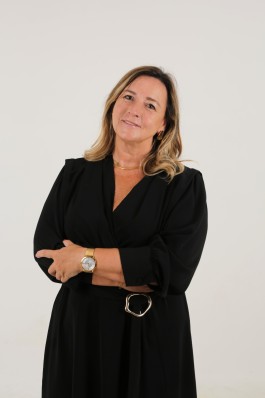
Sílvia Biscaia is the founder of Biscaia & Co, a Private Office in Almancil, in the Algarve's Golden Triangle, providing legal, fiscal, property, development, design, management and relocation services to international families through a single point of contact. A lawyer for over thirty years and former CEO of the Awilhelmsen Group's Portuguese operations, she is also founding partner of BVA — Biscaia, Viegas e Associados. As an artist, she shows her work at the office.
FAQs
Why are Americans moving to the Algarve?
American interest in the Algarve, Portugal, has grown quickly since 2024, driven by the first direct flight between the US and Faro, the rise of remote lifestyle, climate and established international community. Unlike traditional seasonal buyers, many American families are planning long-term residence rather than holiday homes.
Is there a direct flight from the United States to the Algarve?
Yes. United Airline's Newark-Faro route, launched in May 2024, was the first-ever direct connection between the United States and the Algarve, operating four flights a week in season. It has since been renewed for a second and third season, a strong indicator of sustained demand.
How long is the flight from New York to the Algarve?
The Newark-Faro flight is an overnight service: passengers leave the New York area in the evening and land at Faro Airport around mid-morning the next day. A traveller leaving after-work can be in the Algarve's Golden Triangle by lunchtime.
How many Americans live in Portugal?
The number of US citizens legally resident in Portugal rose by more than a third in a single year, from about 14,000 to over 19,000. American hotel nights in the Algarve also reached roughly half a million in 2024.
Are Americans buying property in the Algarve?
Yes, and at fast pace. American buyers have grown from under 1% of Portugal's high-end foreign purchasers before the pandemic to around 10% as of 2026, making them the fastest-growing buyer nationality in a market historically dominated by British buyers.
How are American buyers different from the traditional Algarve buyers?
The traditional Algarve buyer was European, a two-to-three-hour flight from home, and often seasonal. American buyers more often plan in years rather than weeks, many work remotely, and they tend to ask residents' questions: international schools, healthcare, tax residence in Portugal and how to manage life across the Atlantic.
Can I manage a home or relocation in the Algarve from the United States?
In practice, it is very difficult. From six time zones away, a family cannot attend meetings at the Loulé municipal council, visit a renovation site mid-week or tour several schools in an afternoon. For this reason, many American families rely on a single, permanent counterpart in the Algarve, such as a private office, to coordinate property, licensing, schools, renovation and legal and fiscal matters.
What does an American family need when relocating to the Algarve?
A relocation to the Algarve typically involves property purchase or development, municipal licensing, renovation, international school places, healthcare, residence, and a legal and fiscal structure covering both Portugal and the US. Because these steps depend on each other, coordinating them through one point of contact reduces delays and gaps.
Do US tax and reporting obligations continue after moving to Portugal?
Yes. US citizens living in Portugal remain subject to US reporting requirements such as a FATCA and FBAR, as well as US rules on foreign structures, alongside Portuguese rules on foreign structures, alongside Portuguese rules on tax residence, property and succession. Each case should be reviewed individually, ideally by US and Portuguese advisors working together from the start.
Can my US attorney, CPA or wealth manager keep advising me after I move to Portugal?
Yes. US advisors can continue to manage the relationship while a Portugal-based counterpart handles local execution. In Biscaia & Co's experience, American families settle most smoothly when their US and Portuguese advisors are introduced early and work as a single team rather than one after the other.
Are there international schools in the Algarve?
Yes. The Algarve has several international schools, and demand is rising with the arrival of American families, with schools reporting longer waiting lists. Families planning a move should begin school applications well in advance.
What is Biscaia & Co?
Biscaia & Co is a Private Office in Almancil, in the Algarve's Golden Triangle, serving international families and investors with interests in Portugal. Through its own expertise and a trusted network of partners, it coordinates everything a family needs here, legal, fiscal, property, development, design, management and relocation, through a single point of contact.
Who is Sílvia Biscaia?
Sílvia Biscaia is a Portuguese lawyer with over thirty years of practice and the founder of Biscaia & Co. From 2014 to 2026 she was CEO of the Awilhelmsen Group's Portuguese operations, leading the five-star Dunas Douradas Beach Club resort and delivering two luxury residential developments in the Golden Triangle. She is also founding partner of the law firm BVA — Biscaia, Viegas e Associados.
What does a Private Office do?
A Private Office acts as a family's single point of contact for an entire area of life: in Biscaia & Co's case, life in Portugal. Rather than the family coordinating a lawyer, agent, architect, builder and property manager separately, the Private Office selects, briefs and supervises them all, and holds one relationship with the client.
The Americans Are Arriving in the Algarve. Here Is What a Transatlantic Life Actually Requires.
Investments & Insights | September, 2026
On a Tuesday morning in early summer, a Boeing 757 lands at Faro just after ten. It left Newark the evening before. The passengers coming through arrivals, golf bags, young families, a surprising number of laptop bags, are the visible edge of the quietest big change the Algarve has seen in a generation.
The route itself is young. United's Newark–Faro service, launched in May 2024, was the first ever direct connection between the United States and the Algarve: four flights a week, timed so that a New Yorker leaving after work is on a first tee in Quinta do Lago by noon the next day. Routes like this are experiments, and airlines end the failed ones quickly. This one was renewed for a second season, and then a third, which in aviation is the plainest possible statement that the demand is real.
The numbers behind the aircraft tell the fuller story. American hotel nights in the Algarve reached roughly half a million in 2024, up double digits before the direct flight had completed its first year. The number of US citizens resident in Portugal rose by more than a third in a single year, from about 14,000 to over 19,000. And in the property market, American buyers have gone from under one per cent of Portugal's high-end foreign purchasers before the pandemic to around ten per cent today, the fastest-growing nationality in a market the British dominated for half a century.
What is more interesting than the volume is the profile. The classic Algarve buyer of the past decades was European, within a two-to-three-hour flight of home, and often seasonal: a summer family, a golfing spring and autumn. The Americans arriving now skew differently. They are more often thinking in years rather than weeks, remote work has untethered a generation of senior professionals, and their questions are the questions of residents: international schools, healthcare, tax residence in Portugal, the practicalities of a transatlantic life. An ocean away, a second home makes less sense than a second life.
And a second life, unlike a second home, cannot be self-managed from six time zones away. This is the structural fact beneath the trend, and it is worth stating plainly. A buyer from Surrey could always run an Algarve house personally: a long weekend, a word with the builder, home by Monday. A family in Connecticut cannot. They cannot appear at the municipal council in Loulé, walk a renovation on a Thursday, or interview three schools in an afternoon. The direct flight shortened the journey; it did not shorten the administration. American families relocating to Portugal are the first buyers in this region's history who are structurally too far away to manage their Portuguese affairs themselves, and what they need is not a better estate agent. It is a single, permanent counterpart on the ground: someone who holds the whole picture, the property, the licensing, the school place, the renovation, the legal and fiscal structure, and answers for it. In other markets that role has a name, the private office, and the Algarve is only now beginning to build it.
There is a second audience for whom this matters, on the other side of the Atlantic. Most of these families do not arrive alone; they arrive with advisors. A US attorney, a CPA, a wealth manager, sometimes a full family office, professionals who have looked after their affairs for years and intend to keep doing so. What those advisors lack is not competence but presence: a counterpart in Portugal who speaks their language professionally as well as literally, who understands that American clients bring their own discipline of paperwork, FATCA, FBAR, the treatment of foreign structures, alongside the Portuguese side of residence, property and succession, and who can coordinate the local execution while the relationship of trust stays where it has always been. The families that settle most smoothly are, in our experience, the ones whose American and Portuguese advisors were introduced early and worked as one team rather than in sequence.
The region is adjusting around all of this, mostly quietly. International schools report longer waiting lists. Clinics and advisors who once worked in English for a British clientele now field American paperwork, which is its own discipline. Restaurants notice the earlier dinner hour; padel courts notice everything. None of this is a transformation of character, the Algarve absorbs new communities the way it absorbs weather, but it is a broadening of one, and communities that broaden tend to deepen: more reasons for the next family to find the decision easy.
There is also a quieter economic point. A market that once leaned heavily on one nationality now draws from several, British, Irish, German, Dutch, French, Scandinavian, and now American, which makes it steadier through any one country's political or fiscal weather. Diversified demand is to a region what a diversified portfolio is to an investor.
Geography, in the end, is destiny slowly rewritten by timetables. For fifty years the Algarve was two and a half hours from London. It is now also a single evening from New York: board after dinner, land in time for lunch. Maps do not change. Distances, measured honestly in hours, do. And when they do, what changes is not just who comes, but what they need when they arrive. For fifty years, the Algarve built its services around people who could pop over. It is now learning to serve people who cannot.
Sílvia Biscaia is the founder of Biscaia & Co, a Private Office in Almancil, in the Algarve's Golden Triangle, providing legal, fiscal, property, development, design, management and relocation services to international families through a single point of contact. A lawyer for over thirty years and former CEO of the Awilhelmsen Group's Portuguese operations, she is also founding partner of BVA — Biscaia, Viegas e Associados. As an artist, she shows her work at the office.
FAQs
Why are Americans moving to the Algarve?
American interest in the Algarve, Portugal, has grown quickly since 2024, driven by the first direct flight between the US and Faro, the rise of remote lifestyle, climate and established international community. Unlike traditional seasonal buyers, many American families are planning long-term residence rather than holiday homes.
Is there a direct flight from the United States to the Algarve?
Yes. United Airline's Newark-Faro route, launched in May 2024, was the first-ever direct connection between the United States and the Algarve, operating four flights a week in season. It has since been renewed for a second and third season, a strong indicator of sustained demand.
How long is the flight from New York to the Algarve?
The Newark-Faro flight is an overnight service: passengers leave the New York area in the evening and land at Faro Airport around mid-morning the next day. A traveller leaving after-work can be in the Algarve's Golden Triangle by lunchtime.
How many Americans live in Portugal?
The number of US citizens legally resident in Portugal rose by more than a third in a single year, from about 14,000 to over 19,000. American hotel nights in the Algarve also reached roughly half a million in 2024.
Are Americans buying property in the Algarve?
Yes, and at fast pace. American buyers have grown from under 1% of Portugal's high-end foreign purchasers before the pandemic to around 10% as of 2026, making them the fastest-growing buyer nationality in a market historically dominated by British buyers.
How are American buyers different from the traditional Algarve buyers?
The traditional Algarve buyer was European, a two-to-three-hour flight from home, and often seasonal. American buyers more often plan in years rather than weeks, many work remotely, and they tend to ask residents' questions: international schools, healthcare, tax residence in Portugal and how to manage life across the Atlantic.
Can I manage a home or relocation in the Algarve from the United States?
In practice, it is very difficult. From six time zones away, a family cannot attend meetings at the Loulé municipal council, visit a renovation site mid-week or tour several schools in an afternoon. For this reason, many American families rely on a single, permanent counterpart in the Algarve, such as a private office, to coordinate property, licensing, schools, renovation and legal and fiscal matters.
What does an American family need when relocating to the Algarve?
A relocation to the Algarve typically involves property purchase or development, municipal licensing, renovation, international school places, healthcare, residence, and a legal and fiscal structure covering both Portugal and the US. Because these steps depend on each other, coordinating them through one point of contact reduces delays and gaps.
Do US tax and reporting obligations continue after moving to Portugal?
Yes. US citizens living in Portugal remain subject to US reporting requirements such as a FATCA and FBAR, as well as US rules on foreign structures, alongside Portuguese rules on foreign structures, alongside Portuguese rules on tax residence, property and succession. Each case should be reviewed individually, ideally by US and Portuguese advisors working together from the start.
Can my US attorney, CPA or wealth manager keep advising me after I move to Portugal?
Yes. US advisors can continue to manage the relationship while a Portugal-based counterpart handles local execution. In Biscaia & Co's experience, American families settle most smoothly when their US and Portuguese advisors are introduced early and work as a single team rather than one after the other.
Are there international schools in the Algarve?
Yes. The Algarve has several international schools, and demand is rising with the arrival of American families, with schools reporting longer waiting lists. Families planning a move should begin school applications well in advance.
What is Biscaia & Co?
Biscaia & Co is a Private Office in Almancil, in the Algarve's Golden Triangle, serving international families and investors with interests in Portugal. Through its own expertise and a trusted network of partners, it coordinates everything a family needs here, legal, fiscal, property, development, design, management and relocation, through a single point of contact.
Who is Sílvia Biscaia?
Sílvia Biscaia is a Portuguese lawyer with over thirty years of practice and the founder of Biscaia & Co. From 2014 to 2026 she was CEO of the Awilhelmsen Group's Portuguese operations, leading the five-star Dunas Douradas Beach Club resort and delivering two luxury residential developments in the Golden Triangle. She is also founding partner of the law firm BVA — Biscaia, Viegas e Associados.
What does a Private Office do?
A Private Office acts as a family's single point of contact for an entire area of life: in Biscaia & Co's case, life in Portugal. Rather than the family coordinating a lawyer, agent, architect, builder and property manager separately, the Private Office selects, briefs and supervises them all, and holds one relationship with the client.
